


A planar antenna is a low-profile antenna whose radiating structure is arranged on or parallel to a flat surface. Depending on the design, the radiating elements may be printed metal patches, slots, spiral conductors, waveguide apertures, or multiple elements combined as a planar array. This geometry supports compact installation on radar panels, aircraft, satellite terminals, communication equipment, and RF test systems.
The term describes a physical architecture rather than one single antenna type. A microstrip patch antenna is one familiar planar implementation, but planar antennas also include slot arrays, planar spirals, and waveguide-fed arrays. Their gain, bandwidth, polarization, and beamwidth depend on the element geometry, feed network, material, and effective aperture.
Key point: “Planar antenna” is a broad design category. The correct antenna must be selected by frequency range, gain, polarization, bandwidth, radiation pattern, interface, and installation requirements.
How Does a Planar Antenna Work?
When RF energy reaches the radiating element, current and electromagnetic fields are established across the planar aperture. The geometry and dimensions of the element control the resonant frequency, while the feed position and matching structure determine how efficiently energy is transferred. In transmit mode, the fields radiate into free space. In receive mode, the same structure converts incoming electromagnetic waves into guided RF energy.
Basic Structure of a Planar Antenna
- Radiating element or aperture: The active surface may use a patch, slot, spiral trace, or an array of repeated elements.
- Ground plane or supporting structure: This provides a reference surface, influences the radiation pattern, and can improve isolation from the mounting platform.
- Feed network: Microstrip lines, coaxial probes, waveguides, coupling slots, and corporate feed networks may be used according to bandwidth, power, and array requirements.
- Substrate, radome, and housing: Their dielectric and mechanical properties can affect efficiency, matching, thermal behavior, and environmental durability.
Common Types of Planar Antennas
- Microstrip patch antennas: Printed patches above a ground plane offer a thin, lightweight structure and straightforward integration with RF circuits. See our guide to microstrip antenna structure and operation for a detailed explanation.
- Planar slot and waveguide slot arrays: Slots formed in a conducting surface or waveguide aperture can be arranged to provide controlled polarization, beamwidth, and gain.
- Planar antenna arrays: Multiple elements are positioned across a flat aperture. Their spacing and feed phase determine the combined beam and sidelobe behavior.
- Planar spiral antennas: Spiral conductors can support wideband operation and circular polarization when their geometry and feed are properly designed.
These designs share a low-profile form but are not interchangeable. Each family has different bandwidth, efficiency, power-handling, manufacturing, and integration characteristics.
Key Performance and Design Factors
- Frequency range and bandwidth: Element dimensions, substrate properties, aperture geometry, and feed design must support the required operating band.
- Gain and aperture size: Higher gain generally requires a larger effective aperture or an array with more radiating elements.
- Beamwidth and sidelobes: Element pattern, array spacing, amplitude distribution, and phase control shape the final radiation pattern.
- Polarization: Linear, dual-linear, or circular polarization may be selected according to link orientation, propagation conditions, and system requirements.
- Efficiency and feed loss: Dielectric loss, conductor loss, waveguide loss, and feed-network complexity influence realized gain.
- Mechanical and environmental limits: Size, weight, connector or waveguide interface, power handling, temperature, sealing, vibration, and mounting method should be reviewed early.
Advantages and Limitations
Advantages
- Low-profile geometry suited to flat or conformal installations
- Good compatibility with arrays, RF circuits, and compact system housings
- Flexible control of gain, polarization, beamwidth, and operating frequency
- Scalable aperture for radar, communication, and measurement applications
Limitations
- Bandwidth and efficiency may be limited in some printed designs
- Feed-network loss and manufacturing tolerance become more important at higher frequencies
- High-gain arrays can require a larger aperture and careful thermal or structural design
- Nearby metal, radomes, housings, and mounting surfaces can change measured performance
Typical Applications
Planar antennas are used in radar and sensing systems, satellite communication terminals, point-to-point microwave links, aerospace platforms, wireless infrastructure, navigation equipment, electronic test systems, and compact RF devices. The preferred architecture depends on whether the project prioritizes wide bandwidth, high gain, electronic scanning, low profile, circular polarization, or environmental durability.
Planar Antenna vs. Microstrip Antenna
A microstrip antenna is one type of planar antenna, but the two terms are not identical. Microstrip antennas normally use a printed metal patch, dielectric substrate, and ground plane. A planar antenna may instead use slots, waveguide cavities, spiral conductors, or an array of different radiating elements. Keeping this distinction clear helps prevent a broad planar-antenna article from duplicating a detailed microstrip-antenna guide.
How to Select a Planar Antenna
Start with the required frequency range, gain, beamwidth, polarization, VSWR, interface, power level, and available installation area. Then consider the operating environment, radome or housing, mounting orientation, cable or waveguide loss, and whether a standard or customized pattern is required. For array designs, sidelobe level, element spacing, feed distribution, and scan range may also be important.
RF MISO Planar Antenna Solutions
RF MISO supplies planar and array antenna solutions for radar, communication, measurement, and system-integration applications. View our planar antenna products, or contact our team with your frequency, gain, polarization, interface, size, and environmental requirements.
Frequently Asked Questions
Is a planar antenna the same as a patch antenna?
No. A patch antenna is a common planar implementation, but planar antennas can also use slots, waveguide apertures, spirals, and multi-element arrays.
Can a planar antenna provide high gain?
Yes. High gain can be achieved with a sufficiently large effective aperture or a properly designed array. The final result depends on efficiency, feed loss, element spacing, and aperture distribution.
Which polarization can a planar antenna support?
Depending on the radiating element and feed arrangement, a planar antenna may support linear, dual-linear, or circular polarization.
Featured Planar Antenna Products
The following RF MISO models illustrate compact planar and slotted-waveguide antenna options for microwave applications.
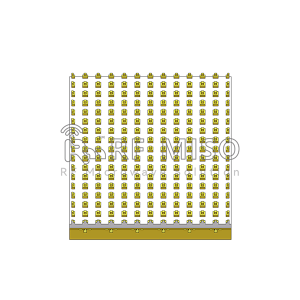
RM-PA10145-30, 10-14.5 GHz
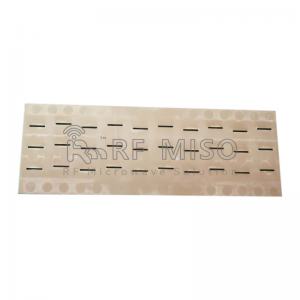
RM-SWA910-22, 9-10 GHz
E-mail:info@rf-miso.com
Phone:0086-028-82695327
Website:www.rf-miso.com
Post time: Nov-14-2023


