History
The concept of array antennas dates back to the 1930s and was originally composed of several antenna elements to improve the performance of communications and radar systems. With the advancement of technology, array antennas have gradually developed into overall systems composed of a large number of antenna elements, which can achieve complex signal processing and beam forming. In the 1950s, array antennas began to be widely used in the military and aviation fields. Subsequently, with the development of microwave and communication technology, array antennas were used in fields such as satellite communications, radar, mobile communications and wireless networks.
Working principle
An array antenna is an antenna system consisting of multiple antenna elements arranged in a specific geometry and spacing. The working principle of array antennas is based on the concepts of beam forming and beam pointing.
When an incident wave reaches the array antenna, each antenna element receives the same incident wave with a different phase delay. The phase delay between these antenna elements is achieved by adjusting delay lines or phase shifters in the circuit. By adjusting the phase delay of each antenna element, the synthesis and interference of incident waves in the array can be controlled.
Through reasonable phase delay control, array antennas can achieve beam forming. A beam refers to the main direction of energy radiated by an antenna, similar to a concentrated beam of light or a sound beam pointed in a specific direction. By adjusting the phase delay of each antenna element, incoming waves can be superimposed and enhanced in certain directions and canceled and attenuated in other directions. In this way, the array antenna can form a narrow and directional beam, thereby increasing the gain and directivity of the antenna system.
The directivity of the array antenna can be adjusted by changing the phase delay. By controlling the phase delay, the pointing angle of the beam can be changed to point it towards the target or area of interest. This makes array antennas have important applications in radar systems, communication systems and wireless networks, and can achieve functions such as target tracking, signal direction and interference cancellation.
In addition to beamforming and directivity, array antennas also have other advantages, such as spatial multiplexing, anti-interference capabilities, and flexibility. By exploiting the interaction between antenna elements in the array, multiple signals can be received and transmitted simultaneously, thereby increasing system capacity and efficiency.
In summary, array antennas achieve beamforming and directivity by adjusting the phase delay of each antenna element to achieve enhanced radiation and reception in specific directions. They have a wide range of applications in communications, radar and wireless networks, providing advantages such as high gain, directivity and flexibility.
Related Products
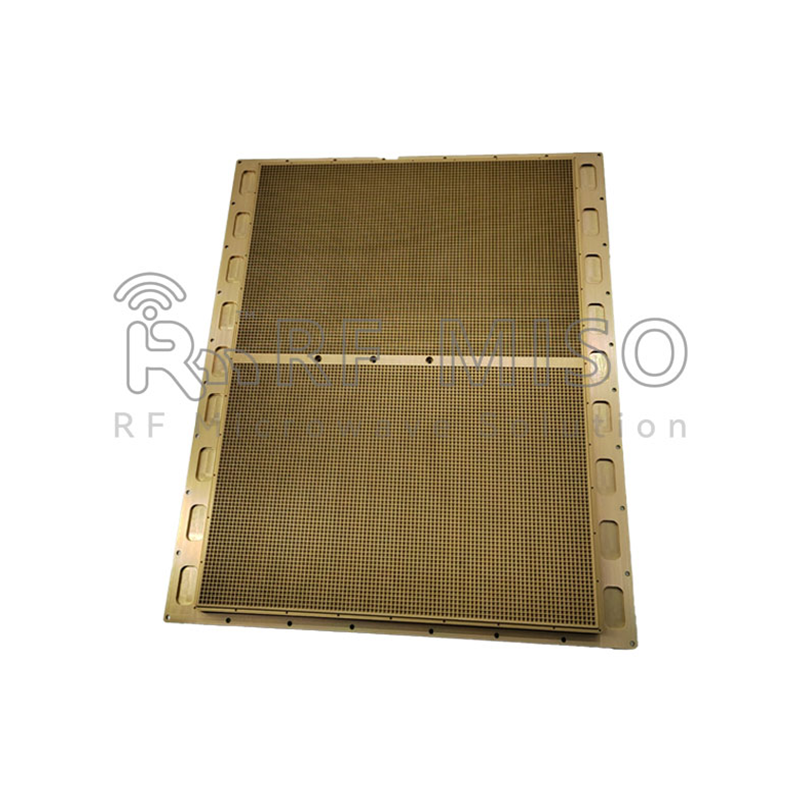
RM-PA7087-43
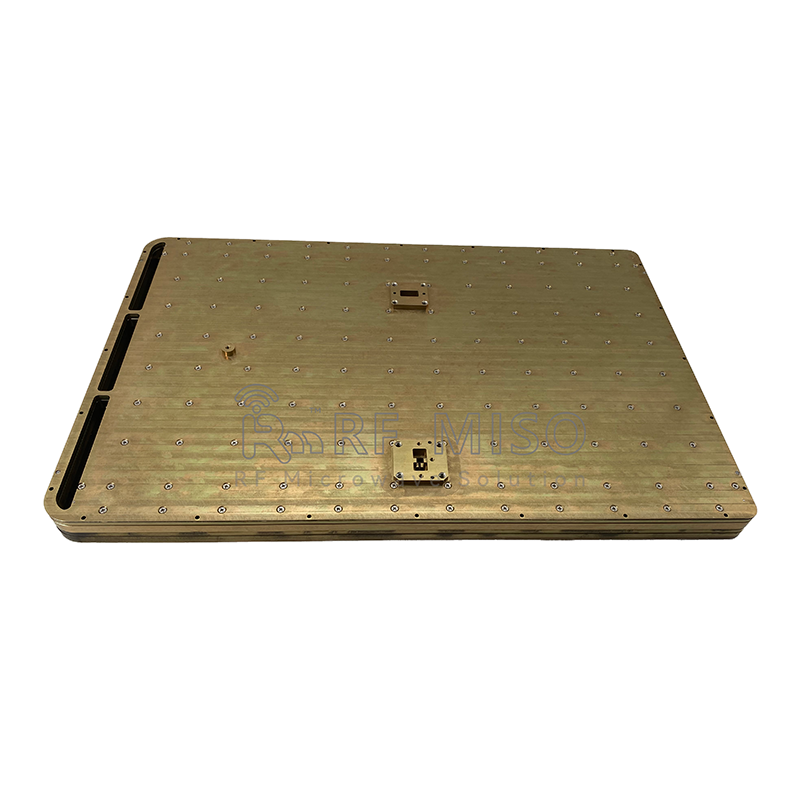
RM-PA1075145-32
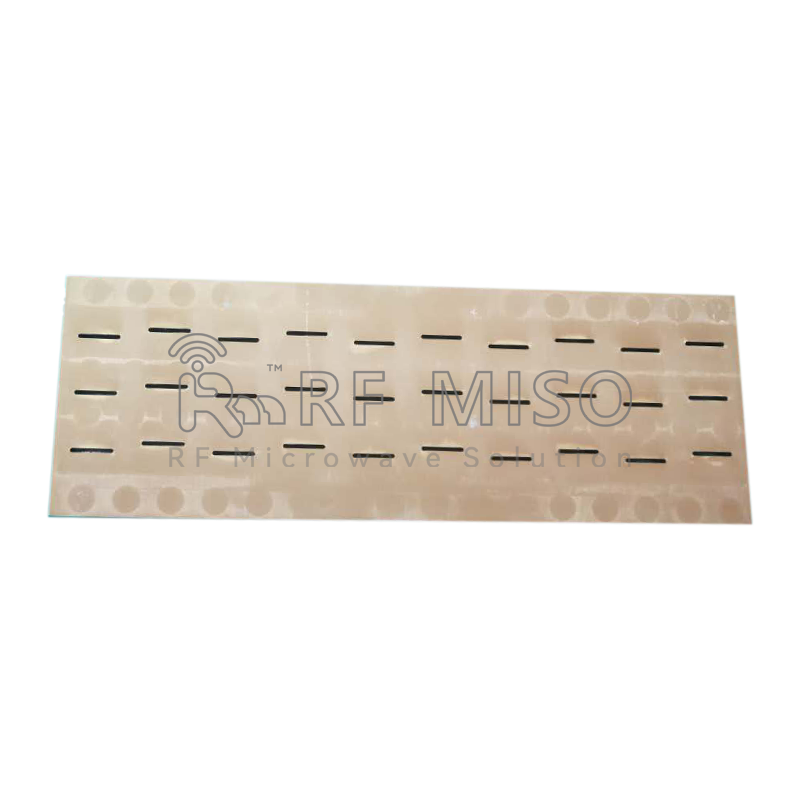
RM-SWA910-22
RM-PA10145-30