


A communication antenna is the interface between an RF transmitter or receiver and free space. It converts guided electrical energy into electromagnetic waves for transmission and performs the reverse process at the receiving end. Its performance directly affects link range, coverage, data reliability, interference control and the accuracy of RF measurements.
The term communication antenna does not describe one geometry. It includes omnidirectional, directional, broadband, low-profile and electronically steered designs selected for a specific frequency band, polarization, gain, beamwidth, installation environment and system objective.
What Is a Communication Antenna?
In a practical wireless link, the antenna works with the transmitter, receiver, feed line and propagation channel. A well-matched antenna helps deliver RF power efficiently, while its radiation pattern determines where that energy is sent or received. Engineers therefore evaluate the complete link rather than selecting an antenna by gain alone.
Main Types of Communication Antennas
Omnidirectional and Wire Antennas
Dipole, monopole and biconical antennas are used when broad azimuth coverage is required. Their relatively simple structures make them useful for general wireless communication, monitoring, field systems and wide-area reception. The final choice depends on the required bandwidth, polarization, installation height and surrounding structures.
Directional and Aperture Antennas
Horn antennas and reflector antennas concentrate RF energy into a controlled beam. They are widely used for point-to-point links, satellite terminals, radar feeds and microwave measurements where directivity and beam control are important.
Broadband, Low-Profile and Array Antennas
Log periodic antennas support wide frequency coverage for monitoring, EMC work and multi-band communication. Patch and microstrip antennas provide compact, low-profile integration, while antenna arrays combine multiple elements to shape or steer a beam and improve system coverage.
Communication Antenna Applications
Wireless Networks and Broadcasting
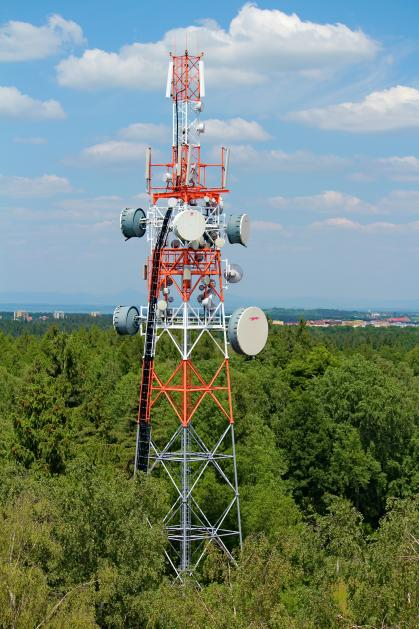
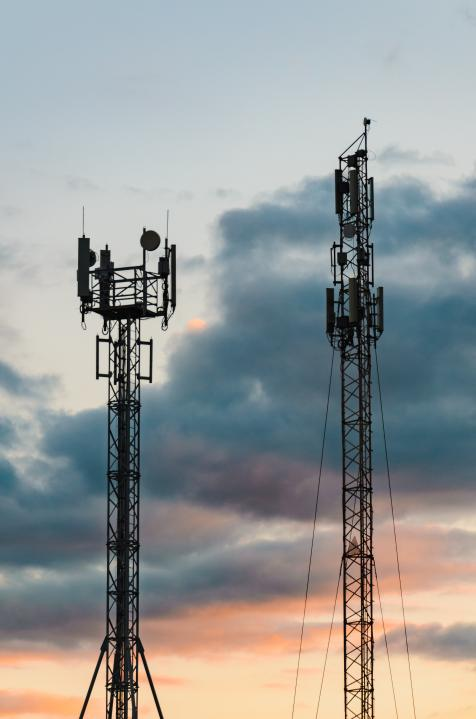
Communication antennas support cellular networks, private radio, Wi-Fi, microwave links and broadcast services. Base stations and fixed links generally require carefully controlled coverage, while portable devices prioritize compact size, efficiency and integration with the surrounding enclosure.
Satellite and Aerospace Communication
Satellite links require antennas that support the assigned frequency band, polarization and link-budget target while maintaining stable performance over the intended coverage area. Aerospace platforms add constraints such as limited space, aerodynamic installation, vibration, temperature variation and reliable operation between airborne or spaceborne equipment and ground stations.
IoT and Industrial Connectivity
IoT devices, industrial sensors and machine-to-machine systems use antennas to exchange control, status and measurement data. Antenna efficiency, orientation and placement can strongly affect range and reliability, particularly when the device is installed near metal, inside an enclosure or close to other electronics.
Radar, Navigation and Remote Sensing
Radar and navigation systems use antennas to transmit controlled RF energy and receive weak reflected or positioning signals. The required beamwidth, sidelobe level, polarization and scanning method depend on whether the system is intended for detection, tracking, weather observation, imaging, positioning or direction finding.


Defense, Emergency and Field Communication
Mission-critical systems require dependable communication in changing terrain and weather conditions. Portable, vehicle-mounted, airborne and fixed antennas may need wide bandwidth, rugged construction, controlled radiation coverage and compatibility with secure or frequency-agile radios.
Scientific Research and Medical Systems
Communication antennas also support radio astronomy, telemetry, laboratory research, wireless monitoring and connected medical equipment. These applications may prioritize low noise, stable polarization, compact integration or repeatable measurement performance.
How to Select a Communication Antenna
Antenna selection should begin with the operating scenario and link requirements. The most important factors are:
- Frequency range and bandwidth: the antenna must cover the complete operating band with acceptable impedance matching.
- Gain and directivity: higher gain can extend link range or improve measurement sensitivity, but it normally narrows angular coverage.
- Radiation pattern and beamwidth: choose broad coverage, sector coverage or a narrow beam according to the service area and interference environment.
- Polarization: linear, circular or dual polarization must match the system and propagation conditions.


Impedance, VSWR and Power Handling
Antenna impedance should match the transmission line and RF equipment. Lower reflected power improves power transfer and reduces uncertainty in system testing. Transmit applications must also account for average and peak power, connector limits, feed-line loss and thermal conditions.
Mechanical and Environmental Requirements
Size, weight, mounting method, connector orientation and cable routing can be as important as RF performance. Outdoor, airborne, marine and industrial installations may require additional consideration of temperature, humidity, vibration, corrosion and radome effects.
Why Antenna Testing Matters
Datasheet values describe performance under defined conditions, but the final installation can change impedance, efficiency and radiation pattern. Engineers therefore verify return loss or VSWR, gain, polarization, beamwidth and radiation patterns in a suitable test environment.
RF MISO supports antenna testing and RF measurement for standard and customized antenna solutions. Testing helps confirm that the selected antenna meets the intended system requirements before integration or deployment.

Matching Antenna Type to the Application
No single communication antenna is best for every system. Omnidirectional designs favor broad coverage, directional antennas focus energy toward a defined area, broadband antennas support multiple bands or measurement tasks, and arrays provide advanced beam control. The correct choice balances electrical performance, mechanical integration, operating environment and budget.
Communication Antenna Solutions from RF MISO
RF MISO provides standard and customized antennas for wireless communication, radar, satellite, aerospace, EMC/EMI testing and RF measurement applications. Explore the antenna product portfolio or contact our team to discuss frequency range, gain, polarization, beamwidth, connector and installation requirements.


Discuss your application: info@rf-miso.com | Contact RF MISO
Post time: Jun-12-2023


