
What is a lens horn antenna
Lens Horn Antenna is a special antenna structure that combines the characteristics of lens and horn elements. It is commonly used in communication and radar systems in microwave and millimeter wave bands. The various parameters of the lens horn antenna will be introduced in detail below.
Gain: Gain is the ability of an antenna to convert incoming electrical power into radiated power. In lens horn antennas, gain is usually the ratio of the maximum radiated power in the direction of the antenna's main beam to the maximum radiated power of a reference antenna (such as an ideal point source antenna). Gain is an important indicator of antenna performance and directly affects the communication distance and receiving sensitivity of the antenna.
Beam width: Beam width refers to the radiation range of the antenna in the main beam direction. For lens-horn antennas, the beamwidth depends on the design of the horn and the shape of the lens. A smaller beamwidth indicates that the antenna has higher directionality and directionality.
Side lobe level: The side lobe level refers to the power level of the radiated power in directions other than the beam direction relative to the main beam. The lower the side lobe level, the more concentrated the radiation energy of the antenna is in the direction of the main beam, which has better anti-interference performance and directivity.
Standing wave ratio: Standing wave ratio refers to the degree of impedance matching at the input end of the antenna. In lens horn antennas, the measurement of the standing wave ratio can be used to evaluate the impedance matching performance of the antenna and the efficiency of signal transmission. A lower standing wave ratio indicates a better impedance match between the antenna and the transmission line.
Frequency range: The frequency range refers to the frequency range in which the antenna can work normally. Lens horn antennas are usually designed for use in a specific frequency band, and their frequency range depends on the characteristics of the antenna construction and materials.
Effective working distance: The effective working distance refers to the maximum distance over which an antenna can achieve acceptable performance and transmission quality in a communication or radar system. This parameter is related to factors such as antenna gain, beam width and environmental conditions.
Construction Dimensions: Construction dimensions refer to the physical size and shape of the antenna. For lens horn antennas, construction dimensions affect the frequency response, beamwidth, and radiation characteristics of the antenna.
The parameters of the lens horn antenna include gain, beam width, side lobe level, standing wave ratio, frequency range, effective working distance and construction size. These parameters take into account factors such as antenna performance, directivity, impedance matching, frequency adaptability and physical size, and are of great significance to the design, optimization and application of antennas.
Related Products
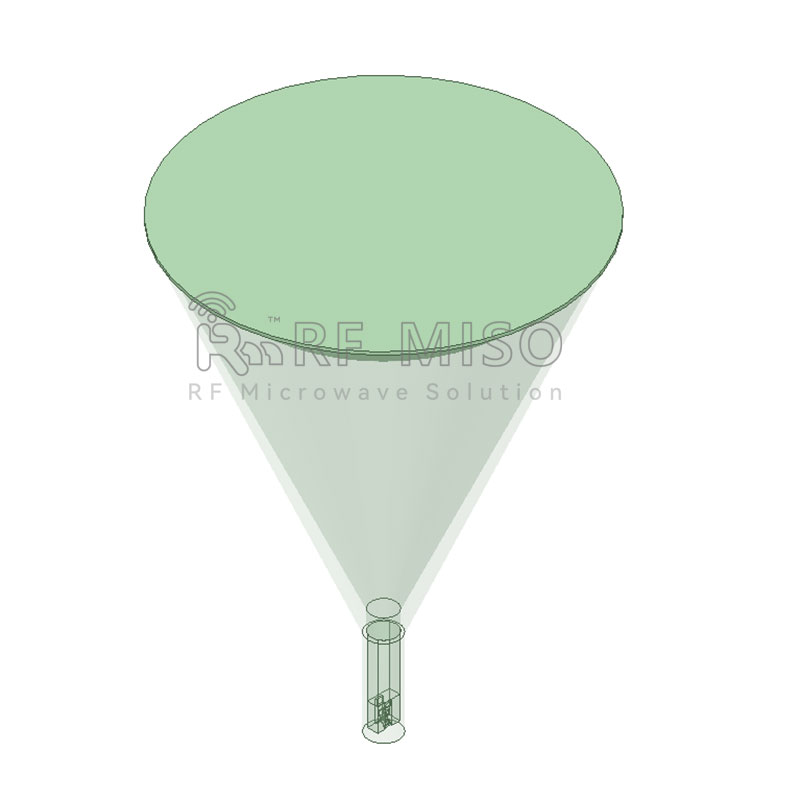
RM-LHA85115-30,8.5-11.5GHz